
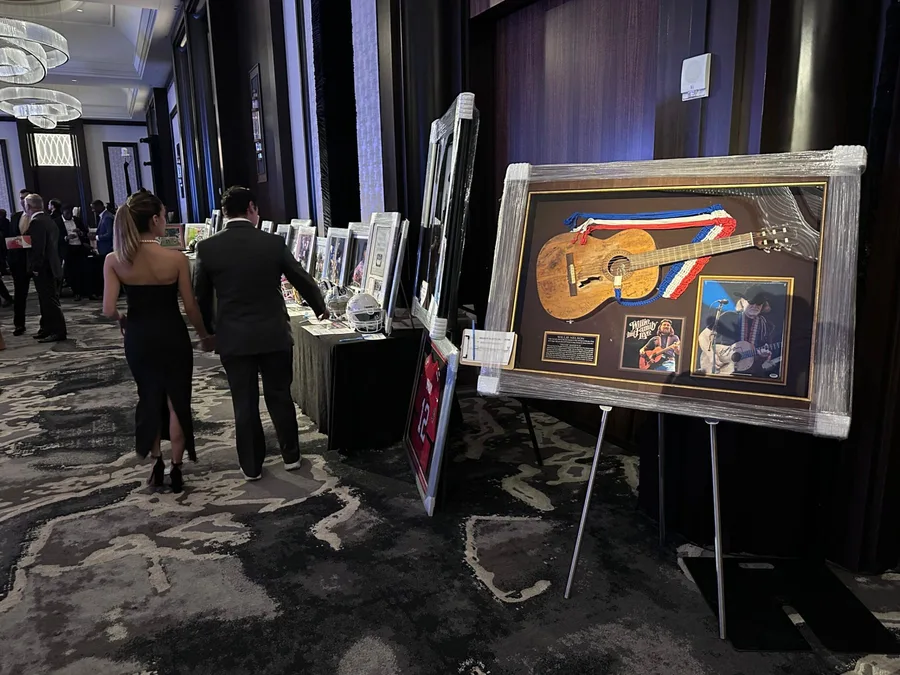
Follow the way guests move.
Place the auction where people naturally pass and have time to pause. Avoid congesting registration, exits, or service routes. Confirm accessible circulation with the venue rather than filling every available surface.
Consider lighting and sightlines at the time the auction will actually run. A display that looks clear during daytime setup may be harder to read at an evening reception.
Keep the information close to the item.
Use a consistent lot number, title, description, and minimum bid. Make restrictions easy to find before a guest bids. Give larger framed pieces appropriate support and keep fragile items secure.
For experience packages, use approved imagery and distinguish illustrative destination photographs from the actual included accommodation.
- Group items in a way guests can understand.
- Leave space for people to read and bid.
- Use readable type and strong contrast on bid sheets.
- Avoid placing food or drinks where they could damage items.
Plan the setup and the breakdown.
Confirm tables, linens, easels, power, load-in, and storage with the venue. Assign responsibility for moving paid items and returning unsold inventory. OFG’s gallery offers real examples to discuss when planning a display that fits your event.
Draw the guest journey before drawing the tables.
Start with the venue floor plan and the places guests need to move. Confirm the final arrangement with the venue, including its access, safety, and service requirements.
| Zone | What a guest should be able to do |
|---|---|
| Arrival and orientation | Notice the auction and understand where to begin without blocking registration. |
| Discovery | See several lots, move comfortably, and stop without preventing others from passing. |
| Consideration | Read terms, examine a piece, and find the correct bid sheet or mobile listing. |
| Assistance | Ask a question or get help without crowding the display. |
| Checkout and collection | Verify a purchase and collect it through a clear route after bidding closes. |
A practical layout review.
Imagine a narrow reception area with a popular bar at one end and the dinner-room entrance at the other. Putting every auction table along the main route may make the collection visible but leave little room to stop. A better plan may use a nearby browsing area and a clear invitation from the reception, subject to the venue’s layout and requirements.
Now consider a large framed piece on a crowded table. Even if the object fits, a guest may not have enough distance to see it or room to read the description. Plan for the viewing experience as well as the footprint. Do not place a physical barrier or a display stand where it interferes with an accessible route or an exit.
Check the display from a guest’s position.
Walk the proposed layout at the approximate lighting level the event will use. Review it standing and from a seated viewing position where practical.
- Can the lot number and title be read without leaning over another item?
- Is the description next to the correct object, with the important restrictions visible?
- Are reflections or shadows hiding the image, signature, or artwork?
- Can a guest using a mobility aid approach and leave comfortably?
- Is there a stable, permitted support for every large or fragile piece?
- Can staff reach the display without interrupting people who are browsing?
Plan the reverse journey too.
Setup is only half the logistical problem. Packaging needs a storage location, sold items need a controlled release process, and unsold pieces need a clear route out. Confirm the venue’s removal window and identify who will remain until the display is cleared.
Keep labels attached or reliably linked to each item so a piece does not become separated from its sale record during breakdown. For experiences, prepare the correct instructions rather than handing over an attractive display card that does not contain the information the winner actually needs.
Use photographs to discuss the plan.
Bring room photographs, table dimensions, and an annotated floor plan to your conversation with OFG. Real examples help clarify the intended presentation, but the final layout should respond to your venue and collection rather than copy another event exactly.
Bring your questions. We’ll start there.
Tell us what you have in place, what you are still deciding, and where your team needs support.
Discuss your venue and layout