
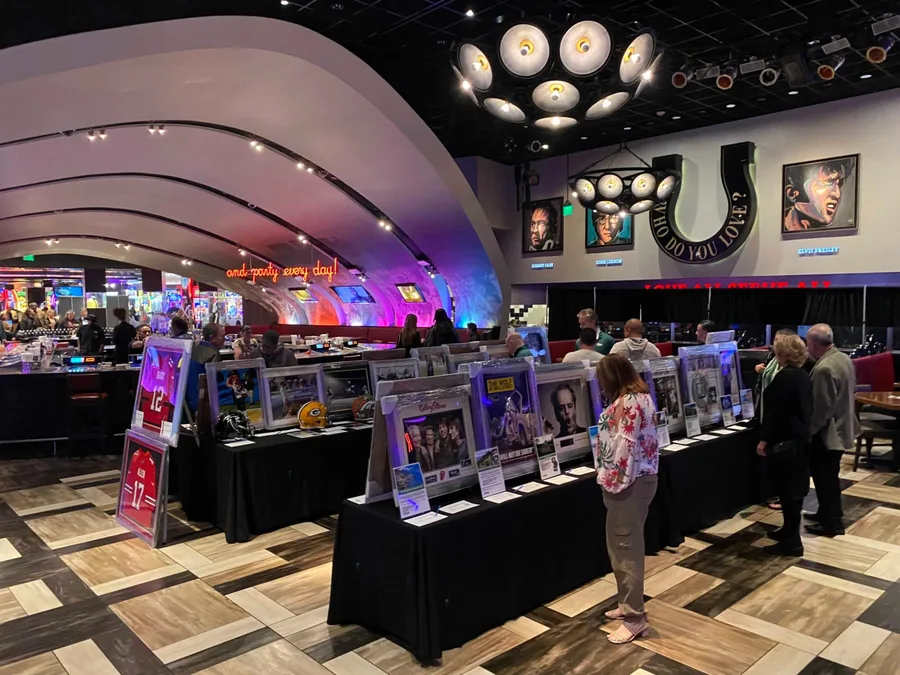
Design for discovery.
Leave space between items and make the information easy to read while standing. Guests should be able to browse without blocking an entrance or interrupting dinner service. Group related pieces thoughtfully, but give distinctive items enough separation to be noticed.
Explore our event gallery for display ideas, from framed memorabilia to experience packages. Share the arrangements you like so we can discuss what will work in your space.
Agree the people as well as the presentation.
Our staffing depends on the number of OFG items and the support your event needs. Services can include setup, handling donated items, answering guest questions, and breakdown. We’ll agree the team and responsibilities in your proposal.
- Share the floor plan and accessible routes.
- Confirm tables, linens, power, and display requirements.
- Agree load-in, security, and breakdown times with the venue.
Keep the evening moving.
Identify one committee contact for last-minute decisions. Staff need accurate package information and a clear route for questions they cannot answer immediately. At the close, separate paid items, outstanding payments, and unsold inventory so the handover stays orderly.
Plan the room from arrival to collection.
An auction display has several jobs: attract attention, explain the offer, make bidding easy, and protect the items. A floor plan should account for all four, as well as the venue’s access and service requirements.
| Area | Planning priorities |
|---|---|
| Approach | A visible invitation to browse, without obstructing registration, doorways, or dinner service. |
| Display | Stable surfaces, readable descriptions, adequate light, and space to look at larger pieces. |
| Bidding assistance | A recognizable place to ask questions and get help with the paper or mobile process. |
| Collection | A controlled handover point with room for packing materials and paid-item checks. |
The right staffing conversation is about tasks.
Guest count matters, but it does not describe the whole workload. Large framed pieces, a short load-in window, a complex donated collection, or a simultaneous checkout can all change what the team must manage. Describe these conditions when discussing support.
OFG staffing depends on the OFG item selection and the agreed scope. Confirm who will set up the collection, help with donated items, answer guest questions, monitor the close, and break down the display. If your volunteers handle some tasks, give them a brief and a named point of contact rather than assuming they know the arrangement.
Information to request from the venue.
Share practical access details as soon as they are available. This helps the people preparing the display work to the venue’s actual conditions.
- Table sizes and coverings, available lighting, and rules for freestanding or mounted displays.
- Delivery entrance, parking or loading arrangements, stairs, lifts, and permitted access times.
- A floor plan identifying exits, service routes, registration, bars, and the auction area.
- Secure storage for packaging and any items not yet on display.
- The end-of-event removal window and the venue contact authorized to resolve access problems.
Small details that make browsing easier.
Place the description where a standing guest can read it without leaning across the table. Keep the lot identifier prominent, and match it exactly to the catalog or bid sheet. Give a large artwork enough viewing distance; give a travel experience a clear summary rather than a crowded wall of fine print.
Think about guests using mobility aids and those who prefer larger text. Leave routes clear and confirm the layout with the venue. A collection feels considered when visitors can explore comfortably, staff can assist discreetly, and the bid instructions do not require explanation at every table.
A clear plan starts with a conversation.
Tell us about your guests, your event, and the responsibilities you would like help with.
Discuss your display and staffing