
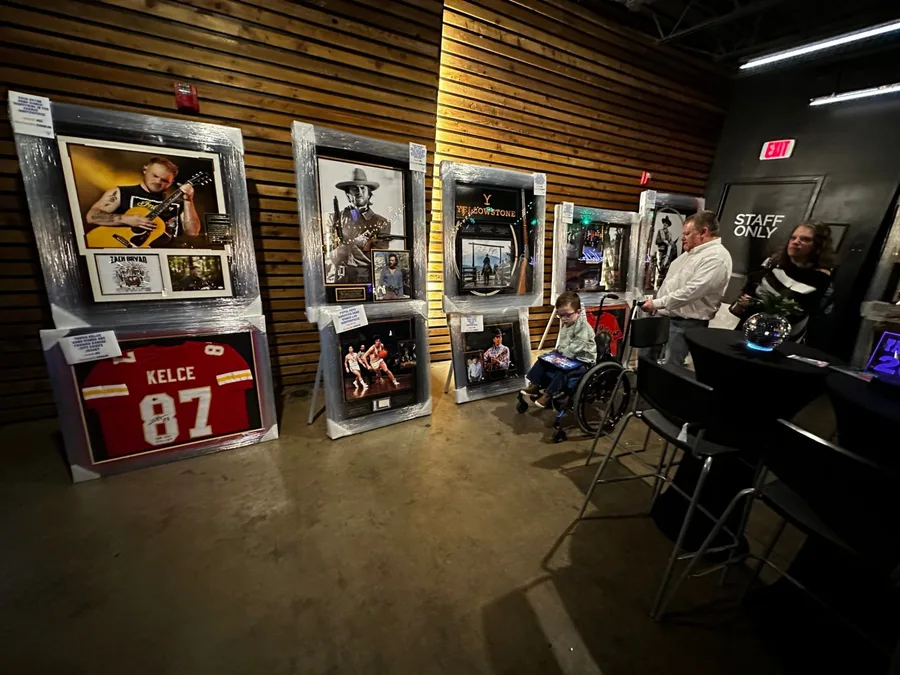
A straightforward partnership.
OFG provides consignment items for your fundraiser and establishes minimum bids. Your charity retains an agreed portion of the minimum bid and everything above it. You pay only for items that sell. An item that does not sell costs your organization nothing.
Your proposal sets out the minimum bid, the reserve payable to OFG, and the share your charity keeps. We’ll walk through those figures with you before you promote the collection.
Complement the donations you already love.
Local donations connect guests with your community. Consignment can add a different kind of opportunity: travel, memorable experiences, or distinctive memorabilia. The strongest mix respects your guests’ interests and the variety of budgets in the room.
Select a focused collection instead of adding items simply to fill tables. Each item needs space, a clear description, and a reason for the audience to care.
Confirm the details before bidding begins.
We’ll review the package terms, restrictions, and fulfillment arrangements with you, including what happens to unsold items. Your team can plan with a clear understanding of the collection and its costs.
- Confirm the minimum bid and your organization’s share.
- Distinguish estimated value from the minimum bid.
- Agree payment, reporting, and return arrangements.
Know what each number means.
When reviewing a proposed item, ask to see the financial terms together. A striking estimated value does not tell you what the charity receives. The reserve and the actual sale price do.
| Term | How it affects your event |
|---|---|
| Estimated value | A reference for describing the item. It is not a guaranteed sale price or a statement of a bidder’s tax deduction. |
| Minimum bid | The starting amount established for the lot. Your agreed share of this amount belongs to the charity. |
| Reserve payable to OFG | The amount due for a sold item under your agreement. Confirm it before publishing the lot. |
| Winning bid | The accepted sale amount. The charity retains its agreed portion of the minimum and everything above it. |
Evaluate the addition, not just the headline price.
A useful consignment item fills a real gap. Perhaps your donated collection is rich in local services but has no experience for guests who enjoy travel. Or your audience includes sports collectors, yet the committee has no route to a well-documented signed piece. Those are reasons to discuss a complementary selection.
Adding several similar high-minimum lots to a room with limited interest can divide attention. Start with the audience, check the restrictions, and consider how much browsing and bidding time guests will have. No upfront inventory cost removes the need to purchase unsold stock; it does not remove the need for thoughtful selection.
Your approval checklist.
Before approving a consignment collection, your committee should be able to explain both the bidder’s purchase and the charity’s arrangement in plain language.
- The exact item or experience, with approved photographs and the current written description.
- The starting bid, reserve, charity share, and treatment of any agreed service or processing charges.
- Who will provide bid sheets or catalog data and who approves the final listing.
- How sold items are paid for, released, shipped, or redeemed.
- What happens to an unsold item and who handles its return for your event arrangement.
Questions committees often bring to us.
Can we combine consignment items with donations?
Yes. OFG can discuss a collection that complements your donated items, and bid-sheet preparation can include those donations. Share the whole list early so the proposed items serve a purpose rather than duplicate an existing lot.
Can we sell the same experience more than once?
Ask about the specific package before the event. A repeat sale needs explicit approval of availability, the number of sales, and the financial terms. Your auctioneer should have that approval before offering an additional package.
A clear plan starts with a conversation.
Tell us about your guests, your event, and the responsibilities you would like help with.
Discuss a consignment collection