
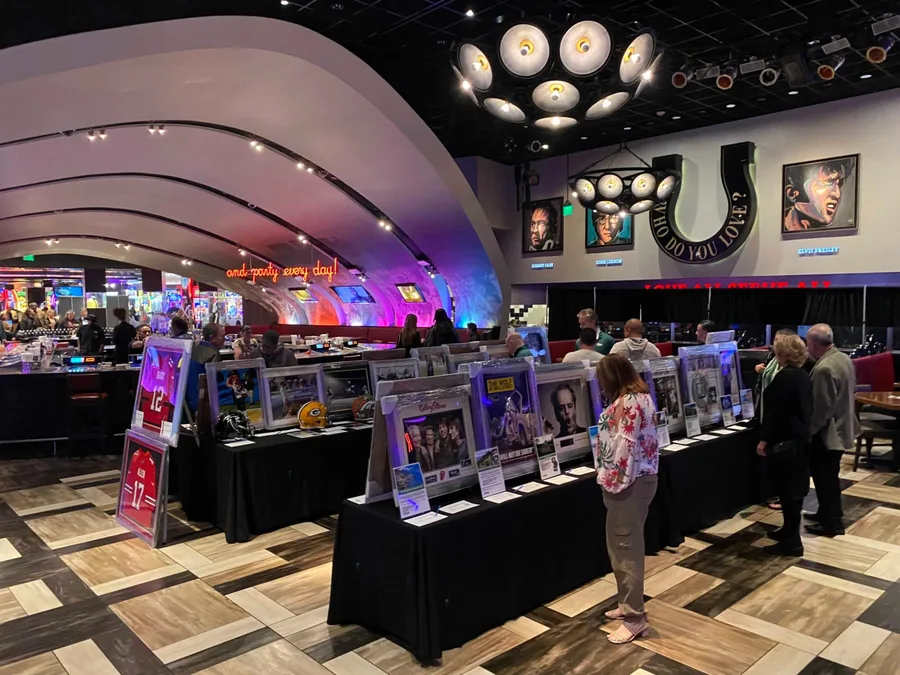
Work from the event, not a fixed ratio.
The right collection size depends on attendance, browsing time, display space, and the mix of interests in the room. A seated gala with a short reception has different constraints from an event with several hours of open bidding.
Avoid relying on a universal items-per-guest formula. Start with the donations already secured, then discuss a targeted consignment supplement with OFG.
Account for the work behind every lot.
Every additional item needs a description, image or display, minimum bid, sales record, and fulfillment plan. A collection that exceeds the team’s capacity can create confusion at checkout even when the bidding goes well.
Sketch the floor plan and walk through the browsing experience. If guests cannot comfortably see the items or read the information, reduce clutter before adding more.
Choose depth of interest over duplication.
Look for gaps in your collection rather than multiple versions of the same idea. If you want to offer a package to more than one winner, confirm that this is permitted for the specific offer before announcing it.
- Allow time for guests to discover each featured lot.
- Keep the number of live lots aligned with the run of show.
- Use previous results as context, not a guarantee.
- Record unsold items and guest questions for the next event.
Find the constraint before choosing a number.
A guest count alone cannot determine the right catalog size. Identify what will limit discovery, bidding, and administration at your event.
| Constraint | What to examine |
|---|---|
| Attention | How much uninterrupted browsing time guests have and what else competes for it. |
| Interest | Whether proposed lots appeal to distinct groups or repeatedly target the same few bidders. |
| Space | How many items can be displayed with readable information and comfortable circulation. |
| Operations | How many listings the team can check and how many purchases it can close and fulfill well. |
| Format | Whether items are silent, live, online, or a combination, with enough attention for each. |
Count bidding decisions, not just invitations.
Two people attending together may make one purchase decision, while another guest may be interested in several categories. Attendance is useful context, but it is not a count of independent bidders or a reliable forecast of demand. Past event records can help you see how participation actually worked.
Look at unique bidders by lot, not only the final sale amounts, when that information is available. Several lots won by the same person can be a successful outcome, yet they do not prove the collection had broad interest. Note whether other bidders participated and where attention was concentrated.
Try a keep, combine, or remove review.
For each lot, ask what would be lost if it were removed. If the answer is only “one less item on the table,” reconsider its role. Keep distinctive items with a clear audience. Discuss combining compatible donated elements only when the donors permit it and the resulting package is easier to understand and use.
Remove or resolve incomplete lots before publication. A smaller catalog with accurate terms is preferable to one containing several items the team cannot explain. For consignment packages, do not alter the package, combine benefits, or assume multiple sales are allowed without the provider’s approval.
A final capacity check.
Before committing to the quantity, walk through the auction as a physical and operational experience.
- Place the proposed lots on the floor plan and leave room for descriptions, viewing, and movement.
- Check the catalog on a phone: can a guest scan it without getting lost in repetitive listings?
- Estimate the preparation work from actual listing and approval tasks, not just the item count.
- Walk through the largest plausible checkout rush and identify where help is needed.
- Confirm who handles unsold lots and incomplete purchases at the end.
Use the first conversation to right-size the collection.
Share your guest count, event format, available browsing time, and donated inventory with OFG. Those details support a more useful recommendation than requesting a fixed number of packages without context. If your plans change, revisit the collection before the catalog is finalized.
Bring your questions. We’ll start there.
Tell us what you have in place, what you are still deciding, and where your team needs support.
Discuss your collection size